
Latest Commodity News
Pension Funds Keep Gold Allocations for Diversification and Inflation Protection
mining.com
2026-10-02 23:22:00 UTCGold is gaining a durable role in some pension fund portfolios as investors seek protection from inflation, market shocks, and the weakening diversification benefits of bonds. Funds in the Netherlands, United States, Britain, and Australia started gold positions mostly between 2020 and 2021 and have kept allocations of about 2% to 5% through physical metal or futures.
Government bonds have traditionally helped diversify portfolios when riskier assets fall, but their correlation with equities has risen significantly in recent years. Gold has shown a more stable correlation profile and tends to become more negatively correlated with equities during severe stock-market selloffs. Bullion has more than doubled since early 2022 even as U.S. bond yields climbed, leading some investors to see gold as regaining a monetary role.
Several specific funds illustrate the trend. The Dutch Pensioenfonds PDN began buying gold in October 2020 and completed purchases in April 2021 to reach a 5% allocation, funded by cutting government-bond exposure by 10%. In the U.S., Fairfax County Retirement Systems holds about 3% of its portfolio in gold through futures. Britain’s Now: Pensions Master Trust has about 2% in gold futures within an alternatives portfolio. Australia’s NGS Super has held about 3% since June 2020, using gold alongside government bonds and other defensive assets.
There is no standard target allocation for pension-fund gold holdings. Funds use the metal differently depending on their funding position, governance, risk budgets, and investment philosophy. Their common feature is persistence: positions opened during the pandemic remain in place five or six years later, mainly as a portfolio diversifier, inflation hedge, and protection during market volatility.
The Rare Earth Supply Challenge: Not Scarcity but Extraction
mining.com
2026-10-02 21:25:20 UTCRare earth elements are essential for high-tech devices, magnets, electric vehicle motors, wind turbines, and advanced computing. Demand is rising quickly as countries seek energy independence and greater computing power. Although they are called rare, they are not scarce in the Earth's crust; some are more abundant than copper, and neodymium is far more common than gold. The real supply problem comes from finding, extracting, and processing them economically.
REE deposits form in several ways. Some occur in magma chambers and carbonatite or alkaline intrusions. Others form in fault-controlled hydrothermal systems or in ion-adsorption clay deposits that need intense weathering and low erosion. These deposits can be small and easily destroyed, making them hard to locate. Exploration uses geophysical methods such as magnetics, gravity, radiometrics, induced polarization, magnetotellurics, seismic reflection, electrical resistivity tomography, electromagnetic surveys, and ground-penetrating radar. Hyperspectral imaging also helps. Common geochemical tools like portable XRF are unreliable for REEs, and acid digestion often cannot dissolve refractory minerals.
Economic feasibility is a major barrier. REEs can occur in more than 200 minerals, but only a few, mainly bastnäsite, monazite, and xenotime, can be processed at viable cost. These minerals often contain radioactive thorium and uranium, creating waste and metallurgical problems. Ion-adsorption clays look promising because REEs might be leached simply, but testing whether the REEs are truly ionic requires expensive lab work. Heavy REEs are less abundant than light REEs, and known heavy REE deposits are concentrated in southern China and Myanmar. China controls up to 94% of the REE market. Brazil has about 23% of global supply and ranks second to China, but it lacks midstream refining capacity and often sends minerals to China for processing.
A more diversified REE market would require new economically viable deposits, new infrastructure, vertical integration, and competitive prices. Building economies of scale will take years. Price floors and government policies supporting supply independence can help, but they also affect spot prices. A promising frontier is recovering REEs from brines, geothermal fluids, and oilfield-produced waters. Research and pilot projects in the USA, Germany, Iceland, and elsewhere are testing electromigration, electrohydrodynamic separation, and advanced ion-imprinted resins. Challenges include binding competition in salty brines, silica scaling, reinjection fouling, and aquifer contamination. Geothermal fields such as the Salton Sea could eventually combine clean energy production with critical mineral supply. Dr Janina Elliott, Segment Director, Mining at Seequent, sees this as a frontier worth watching.
Freeport's Grasberg Copper-Gold Mine Ramps Up After Mudslide
mining.com
2026-10-02 19:07:49 UTCFreeport-McMoRan is recovering its Grasberg copper-gold complex in Indonesia after a mudslide killed seven workers and shut the mine a year earlier. In the third quarter, the operation averaged almost two-thirds of normal milling rates, processing about 140,000 tonnes of ore per day, slightly above analyst expectations. Freeport expects near-full production by the end of next year, and its shares rose about 3.6% to $71.79.
Grasberg is one of the world's largest copper and gold deposits. Its closure removed about 278,000 tonnes of copper from 2025 supply, or roughly 1.2% of global mine output. The Grasberg Block Cave supplied about 70,000 tonnes of daily mill feed during the quarter. Upgrades to the underground material-handling system are on schedule for early 2027, and Freeport plans to restart Production Block 1S by mid-2027, aiming for 80% capacity around then and near-full capacity by year-end. An investigation found that faster removal of broken ore from a clay-rich block helped create a high-velocity path for surface mud; monitoring systems gave no warning.
The East Java smelter restarted in late August and is ramping up as expected. Together with PT Smelting, it can produce up to 800,000 tonnes of copper cathode a year, and a refinery can process all of Grasberg's gold output. Freeport produced about 830 million pounds of copper and 230,000 ounces of gold in the third quarter. It expects copper sales of about 750 million pounds and gold sales of about 100,000 ounces after shifting roughly 60,000 ounces of gold sales into the fourth quarter. Unit net cash costs are expected to rise to about $2.10 per pound of copper from $2 in July, but realized copper prices may exceed $6.50 per pound, which BMO says should largely offset deferred gold revenue. BMO estimates adjusted earnings of $3.09 billion versus a $3 billion consensus, and considers U.S. operational interruptions from flooding, power outages, and strong winds temporary.
Trump and South Korea Disagree Over $8.4 Billion Oil Recovery Investment
oilprice.com
2026-10-02 16:30:00 UTCPresident Donald Trump said the U.S.-South Korea investment agreement now includes $8.4 billion for an enhanced oil recovery project. He described it as a boost for American oil and gas production, energy dominance, and global energy security. The post did not name the field, operator, or location of the project.
South Korea's industry ministry disputed that account. It said the enhanced oil recovery investment was not part of the strategic investment agreement between the two countries. Seoul has asked Washington for clarification, according to Yonhap.
The disagreement comes amid a broader set of U.S.-South Korean investment announcements. Trump said South Korea would put $200 billion into U.S. projects, including eight large nuclear power plants, a 6-gigawatt power generation facility in Texas, and a pipeline tied to the Alaska LNG project. That sits alongside $150 billion for shipbuilding under a $350 billion investment package negotiated last year.
South Korea has been more cautious about the Alaska LNG component. Its government says participation in the roughly $54 billion pipeline project still depends on commercial viability and legal review, and no final investment decision has been made. South Korea has also said it aims to cut its reliance on Middle Eastern crude by as much as half by 2035.
KGHM and South32 Expand Sierra Gorda Copper Mine in Chile
mining.com
2026-10-02 15:43:00 UTCKGHM and South32 have started a $725 million expansion at the Sierra Gorda copper mine in Chile. The project will add a fourth grinding line, raising ore-processing capacity by 26% and lifting annual copper output to nearly 200,000 tonnes. Construction is set to begin in January 2027, with full capacity expected in the second half of 2030.
The expansion aims for average annual payable copper production of about 195,000 tonnes and a roughly 10% reduction in average operating unit costs. It is expected to create about 900 direct construction jobs and support local mining services, transport, and accommodation businesses. KGHM owns 55% and South32 owns 45%; the Sierra Gorda SCM joint venture will manage the project.
The partners also plan a $100 million exploration program from 2028 to 2032 to extend operations to 2049, focusing on the Catabela deposit. In August, they reported a 61% increase in ore reserves, extending the estimated reserve life by about five years to 2045. Reserves now stand at 1.1 billion tonnes grading 0.39% copper, 0.016% molybdenum, and 0.06 grams of gold per tonne.
Chile’s copper industry is facing declining production, and officials say projects like Sierra Gorda can help bridge the gap before a broader expansion cycle begins in 2027. The mine is Chile’s eighth-largest copper producer, accounting for 3.1% of national output, and it also collaborates with BHP’s nearby Spence mine to improve efficiency and sustainability.

Tajikistan Turns to Iran for Oil as Russian Supplies Falter
oilprice.com
2026-10-02 14:00:00 UTCTajikistan has begun receiving oil and petroleum products from Iran, creating a possible new energy source for a country that has long relied on Russia for fuel. Deliveries started in late August after talks between the two countries on expanding oil and gas cooperation. Tajikistan has not revealed the volumes, commercial terms, or how the supplies are transported. It has asked Iran for up to 2.55 million tons per year of crude oil and petroleum products, including gasoline, diesel, and jet fuel, but that is a requested or potential amount, not the current flow.
The shift comes as Tajikistan faces uncertainty over Russian fuel supplies. Russia provided more than 91 percent of Tajikistan's petroleum-product imports in the first half of 2026. Russian fuel shortages and export restrictions, made worse by Ukrainian drone strikes on Russian refineries, have pushed Tajikistan and other Central Asian countries to look for alternatives. In July, Tajik authorities said they were in talks with neighboring countries to secure future supplies.
Tajikistan and Iran have been warming relations. The two countries, which share close linguistic and historical ties, established diplomatic relations in 1992. Bilateral trade reached $438 million in 2025, up 28 percent from the previous year, and they have signed more than 200 agreements and memorandums. In May, their intergovernmental commission discussed energy, transport, industry, investment, science, and technology. They also have defense ties, including a 2022 drone-manufacturing facility in Dushanbe. Relations had worsened in the mid-2010s but began to thaw in the early 2020s, and Tajik President Emomali Rahmon visited Tehran in 2022.
The oil deliveries carry sanctions risk. The US Treasury has warned that Iran's petroleum and petrochemical sectors face increased sanctions risk, and foreign companies or financial institutions may face secondary sanctions for significant transactions involving Iranian petroleum. The State Department says it will continue to disrupt illicit oil trade that supports what Washington calls Iran's malign behavior. Experts say Tajikistan must weigh this risk, though the scale of Tajik-Iranian cooperation is low compared with Russia or China. Tajikistan is trying to balance ties with the United States, Russia, China, Turkey, and other powers. It remains unclear whether Iranian oil can become a substantial replacement for Russian supplies.
US Aims to Regain Control of Critical Minerals Supply Chains and Workforce
mining.com
2026-10-02 13:37:18 UTCThe United States must regain control over critical minerals supply chains to protect its energy, economic, and national security, according to US Assistant Secretary of Energy for Critical Minerals and Energy Innovation Audrey Robertson. The Department of Energy is investing across mining, processing, technology, and workforce development to rebuild domestic capabilities that have moved overseas over the past three decades. Robertson argues that without controlling the supply chain, the country cannot control its destiny.
The strategy goes beyond opening new mines. It aims to accelerate existing projects, improve processing technology, and create conditions that allow US heavy industry to compete profitably at home. This includes bringing back American companies that have outsourced operations. Robertson notes that the US has the world’s most stringent operating environment for heavy industry, which contributed to offshoring, and the initiative seeks to reverse that while showing communities that new technologies can protect the environment.
A major challenge is the talent shortage. Only about 160 mining engineers graduated in the US last year, compared with roughly 3,000 in China. Decades of outsourcing have depleted a generation of talent and education. The Department of Energy estimates the US will need about 6,000 new mining engineers over the next decade to develop and establish the supply chain. The department plans partnerships with universities and aggressive measures to rebuild the workforce.
Overall, the initiative aims to catalyze growth, reduce reliance on overseas processing, and secure domestic supply chains. It also seeks community support for the idea that not all processing technology should be sent overseas, so that the country can lead globally and provide a future for coming generations.
Petra Diamonds Faces Tax Petition Amid Refinancing and Asset Review
mining.com
2026-10-02 12:32:00 UTCPetra Diamonds is facing a winding-up petition against one of its subsidiaries over £5.65 million ($7.5 million) in unpaid UK corporation tax. The petition was filed against Petra Diamonds UK Treasury for tax owed for the year ended June 30, 2025, and is set for a High Court hearing on Oct. 14. The tax bill relates to interest income accrued on a receivable from Ealing Management Services, another Petra subsidiary. Both subsidiaries are non-operating and do not own or run any mines, so mining operations are not directly affected, but the company is checking whether the petition could impact its financing arrangements and refinancing talks.
The tax petition comes just after Petra launched a strategic review that could lead to asset sales to meet short-term cash needs. The review followed talks with key creditors. Petra’s flagship Cullinan mine near Pretoria could be sold, while its Finsch mine in the Northern Cape is being closed after business rescue practitioners found no reasonable prospect of saving it. The company’s balance sheet has weakened because of a long slump in the natural diamond market and a stronger South African rand. Net debt rose to $322 million at the end of June from $298 million three months earlier.
In July, Petra secured an additional working-capital facility from a senior lender and deferred about $6 million in cash interest until January 2027. Its financing arrangements require refinancing discussions to begin in September, with the goal of agreeing non-binding commercial terms by the end of October. The tax petition now lands in the middle of those talks, leaving Petra to determine whether action against its treasury subsidiary has consequences for the broader financing structure even though its mines are not directly subject to the proceedings.
U.S. Oil and Gas Rig Count Falls as Crude Production Rises
oilprice.com
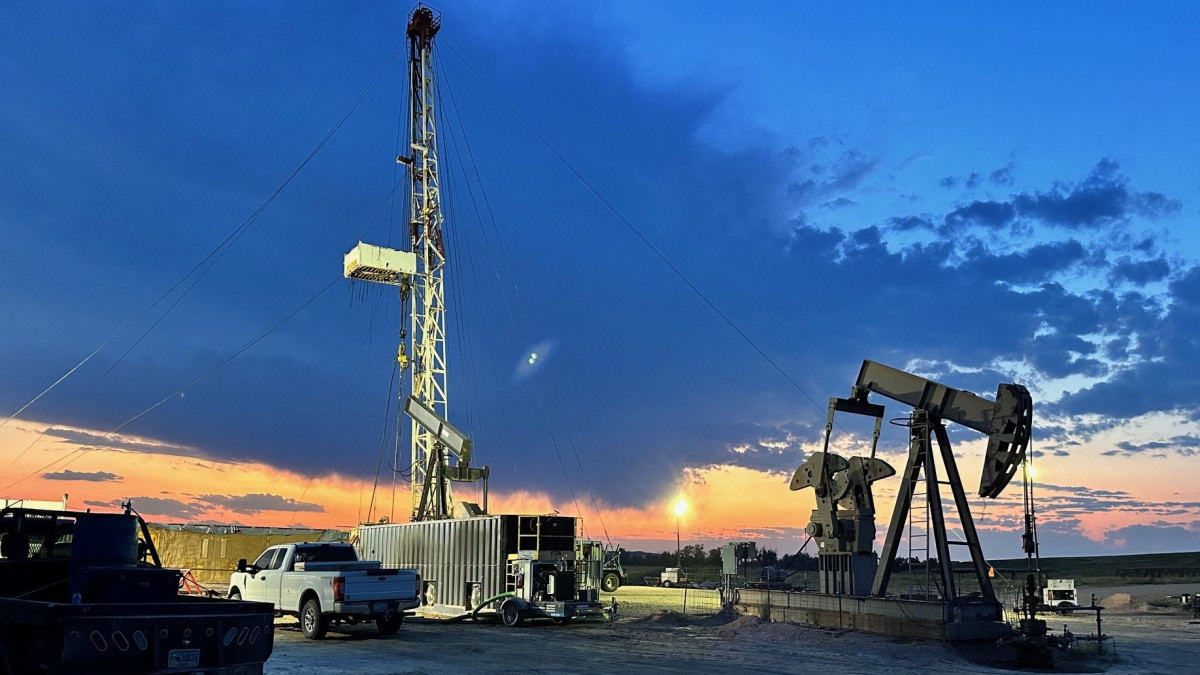
2026-10-02 12:16:00 UTCU.S. active oil and gas drilling rigs fell this week to 598, according to Baker Hughes, though the total remains 49 rigs higher than a year ago. Oil rigs increased by 1 to 456, gas rigs decreased by 2 to 133, and miscellaneous rigs stayed at 9.
Crude oil production averaged 13.955 million barrels per day in the week ending September 25, up slightly from the prior week and 450,000 barrels per day above year-ago levels. The frac spread count rose for a third straight week to 195, up 8 crews. The Permian Basin rig count was unchanged at 270, while the Eagle Ford lost one rig to 49.
Oil prices moved lower on Friday after Europe announced additional releases of crude oil and diesel from emergency reserves. Brent traded at $101.10 per barrel, down 1.14% and nearly $3 below a week earlier, while WTI traded at $90.50, down 2.55%.
Physical Oil Tightens as Dated Brent Tops $120
oilprice.com
2026-10-02 11:50:45 UTCPhysical oil markets are tightening sharply even as financial oil benchmarks weaken. Dated Brent, Europe’s key physical crude benchmark, has jumped above $120 a barrel, while ICE Brent has slipped to about $101 a barrel. The split suggests real barrels are much scarcer than headline futures prices imply. The volatility has been driven by a planned European diesel stock release, drone attacks on tankers in the Strait of Hormuz, and China’s reinstatement of a refined product export ban. OPEC+ is expected to keep November output targets unchanged, with core producers still pumping about 5 million barrels per day below pre-war levels despite an August output increase of 630,000 barrels per day to 25 million barrels per day.
Governments are intervening heavily in fuel markets. European Union governments are considering releasing 50 million barrels of emergency diesel, about 17% of EU emergency diesel inventories, over 20 days after US President Donald Trump threatened a diesel export ban. The United Nations Development Programme warns fuel subsidies could exceed $1 trillion in 2026 as the US-Iran war, triple-digit oil prices, and rising borrowing costs strain budgets; the relief currently shields about 130 million people from falling below the $6.85-a-day poverty line. China has suspended most October refined product exports, leaving diesel stocks around 20 million barrels below pre-war levels and gasoline about 9 million barrels short of target, which has pushed Asian refining margins higher. The US Department of Energy has offered the final 40 million barrels of sour crude from Trump’s 172-million-barrel emergency drawdown for November-December delivery, bringing the countrywide total to 243 million barrels. Russia has extended its diesel export ban through October, removing nearly 10% of seaborne supply, but Deputy Prime Minister Alexander Novak has hinted it could be lifted soon as domestic supply improves. South Korea has rejected Trump’s claim that it committed $54 billion to the Alaska LNG project, saying it will join only if the project is commercially viable.
Regulatory and corporate developments are also reshaping energy and metals supply. Canada’s energy regulator approved Trans Mountain’s new tolls effective January 1, 2027, ending an 18-month dispute over the pipeline’s C$34 billion cost overruns; committed shippers moving at least 75,000 barrels per day over 20 years could receive rates as low as $6.53 a barrel. Trading firm Gunvor is rebranding as Centalion and moving its headquarters from Cyprus to Singapore after a December 2025 management buyout, following US Treasury criticism labelling it a “Kremlin puppet.” China’s antitrust regulator is demanding guaranteed concentrate flows before approving the $54 billion Anglo-Teck merger, as Chinese smelters, which account for 60% of global refined output, face their worst feedstock shortage in decades. Japan’s largest power generator, JERA, has launched an oil storage company to consolidate Japan’s strategic petroleum reserves, taking over four national terminals holding 121 million barrels by April 2029.
Beyond oil, other commodity markets are showing stark moves. Chinese lithium carbonate futures fell 25% last month to below ¥120,000 yuan ($17,900) per tonne after Beijing suspended new battery factories amid a worsening macroeconomic outlook, contradicting expectations of continued supply shortages. Panama plans to recommend restarting the Cobre Panama copper mine through a state partnership with Canadian miner First Quantum, following a three-year hiatus at a site that once produced 1% of global copper and 40% of the miner’s revenue. Saudi Arabia’s restarted East-West pipeline is nearing full strength, with flows close to 6 million barrels per day and about 4.5 million barrels per day available for Red Sea exports, restoring a bypass around the Strait of Hormuz despite continued Houthi strikes. Chinese thermal coal prices hit a three-year high of ¥986 yuan per tonne ($147 per metric ton), extending an 11-week rally and gaining 25% since mid-July, driven by a sharp decline in Indonesian imports and continued mine security clampdowns in Shanxi.